
Last updated October 15, 2026
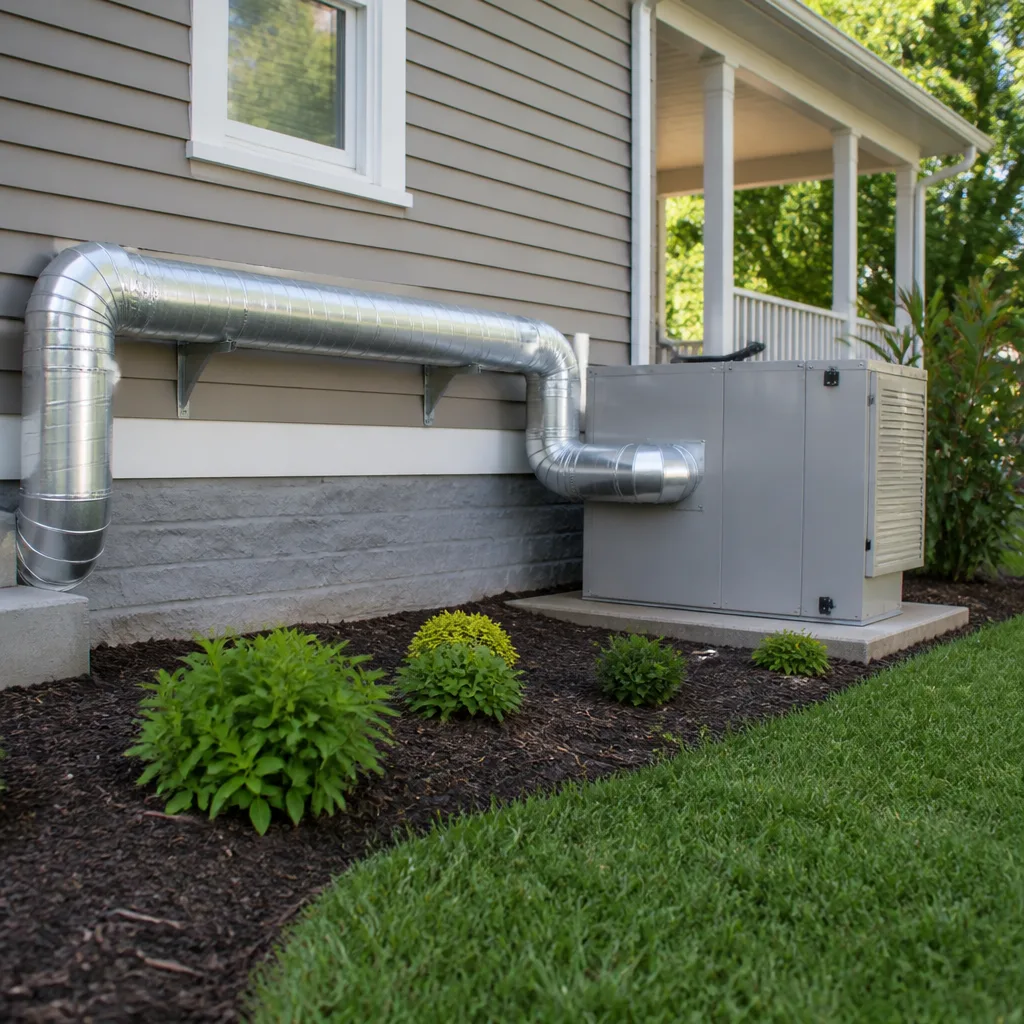 Whole-home duct cleaning
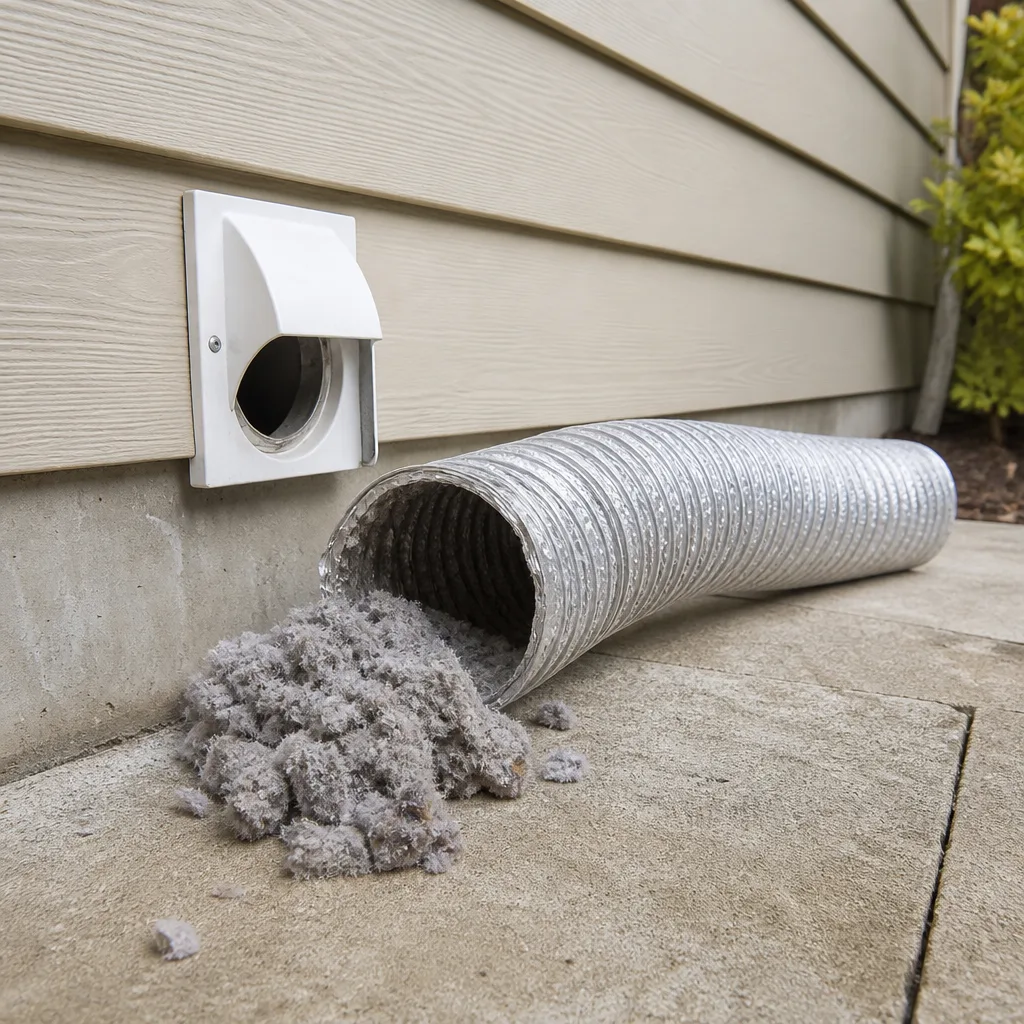 Dryer vent cleaning
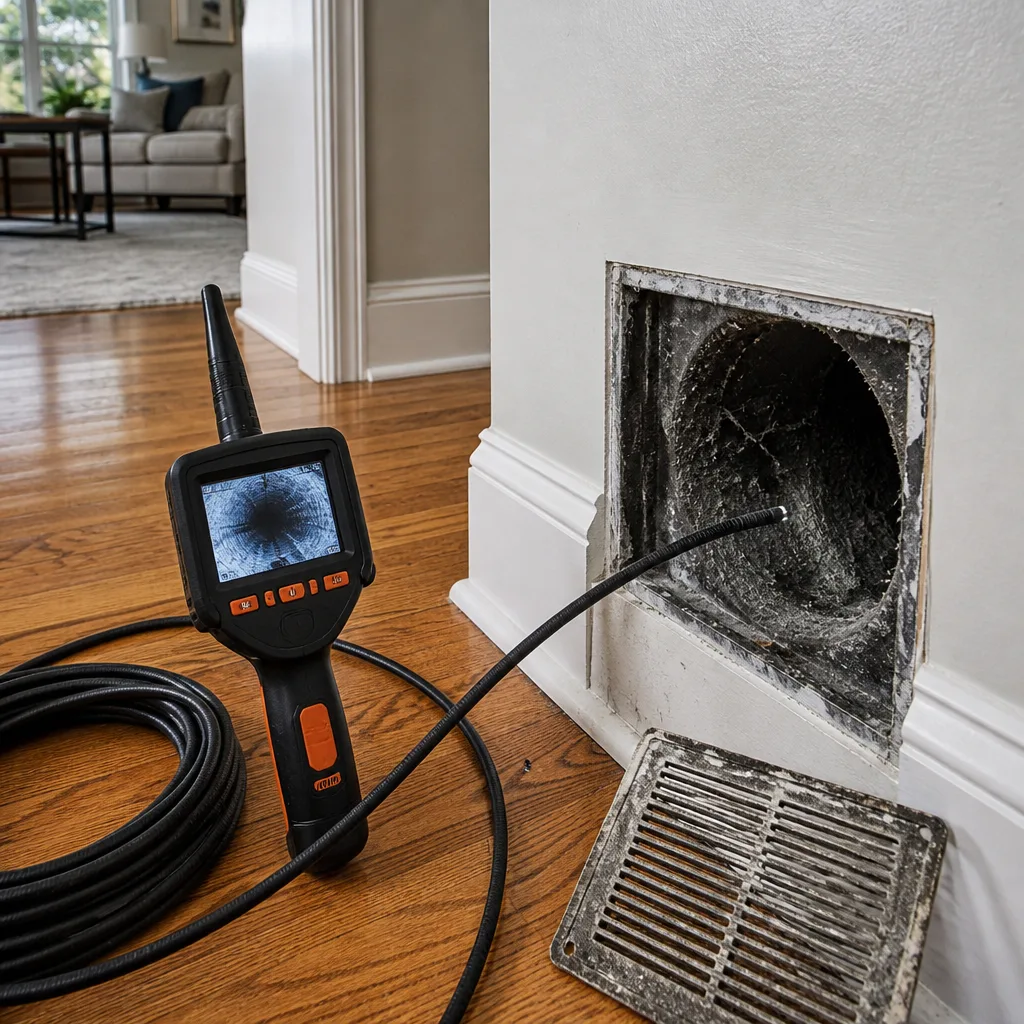 Camera inspection
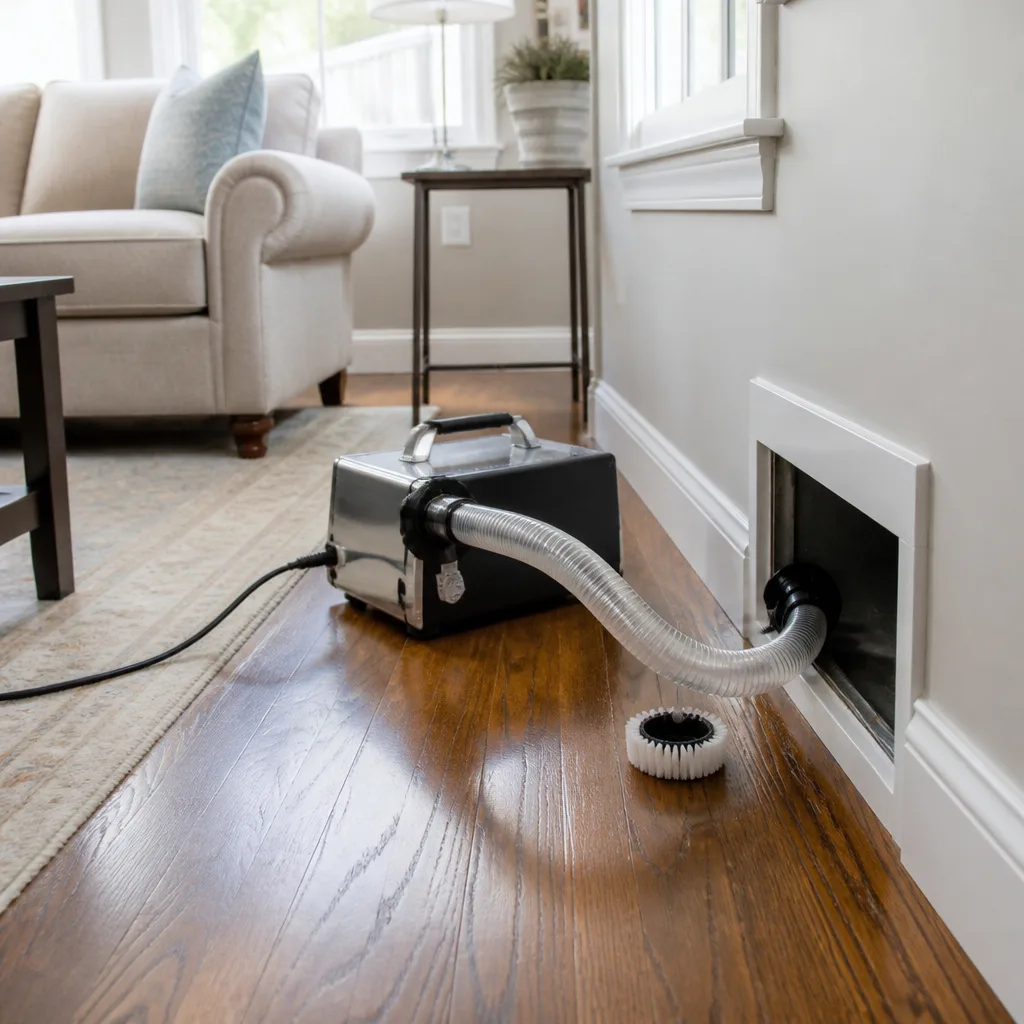 Sanitizing & deodorizing
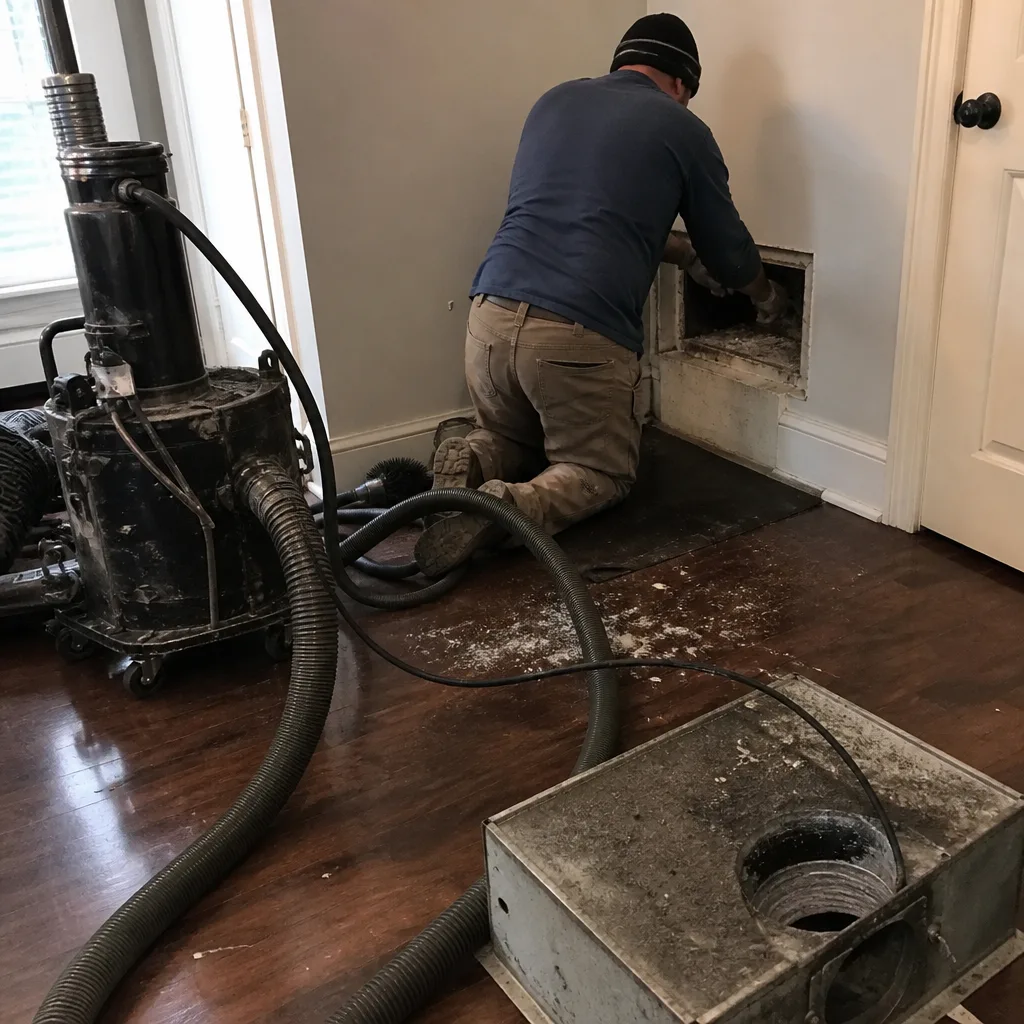
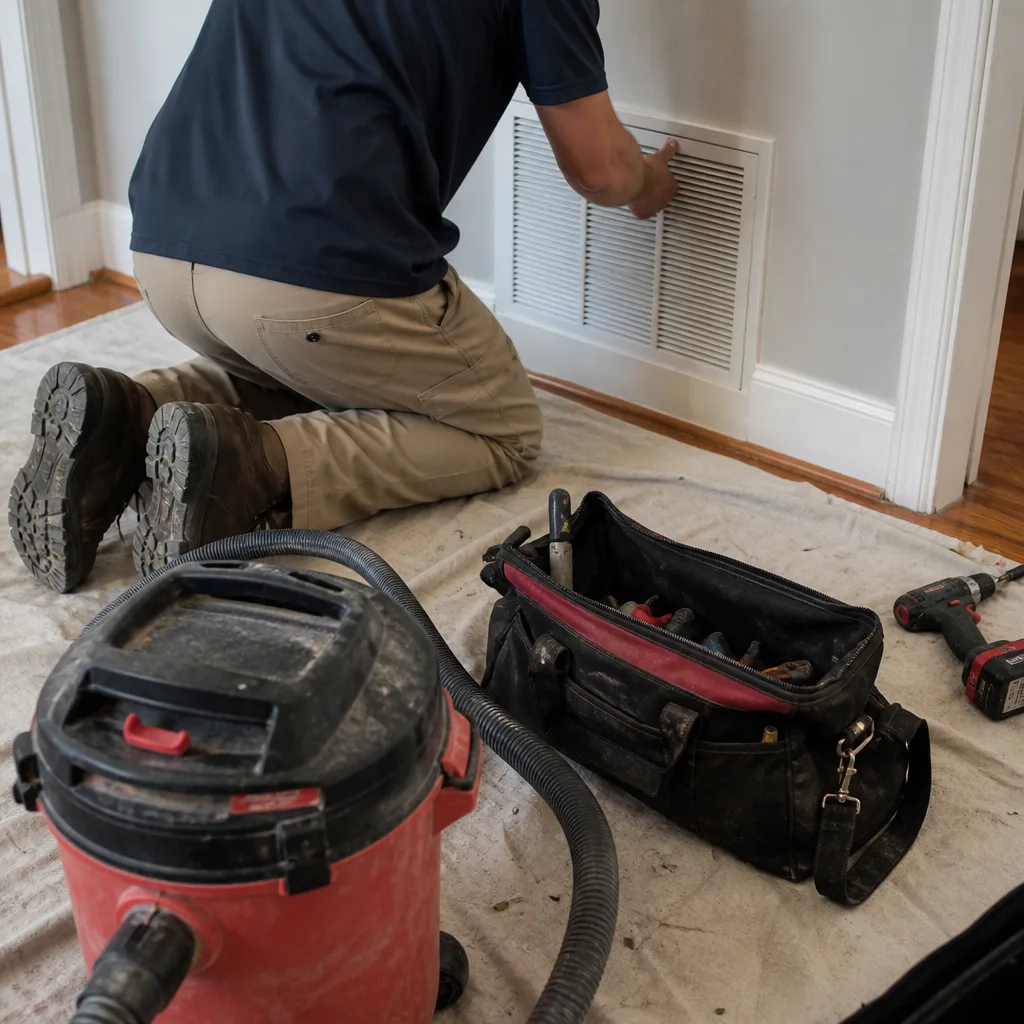
Whole-system duct and dryer vent check with before-and-after photos - you see exactly what came out of your vents
That "$99 whole-house special" is a bait ad - the real number appears once they are in your hallway, or the "clean" is a shop-vac at the register. We photograph the inside of your ducts before and after instead.
Seasonal Air Duct Cleaning Care for Marietta: Year-Round Homeowner’s Guide
In Marietta, the six weeks after peak pollen season ends in late May aren’t a reprieve for your ducts. They’re the period when settled pollen mixes with rising humidity to create the exact conditions mold needs to establish inside flex duct lining. Most Marietta homeowners treat duct care as a single fall chore, but that approach misses three other windows where small, season-specific interventions prevent expensive problems. This guide walks through what actually happens inside your ductwork during each of Marietta’s four distinct seasons, what you can do yourself, and what genuinely requires a trained technician with professional equipment for Air Duct Cleaning. By the end, you’ll have a working calendar for year-round duct care that fits how people actually live in Cobb County.
Styles & brands we work with
Quick Answer
Seasonal air duct care in Marietta means adjusting what you do to your ductwork four times a year, not just once. Spring calls for post-pollen inspection and a filter change before cooling season loads your system. Summer demands humidity awareness and watching for microbial growth. Fall is the critical window for gas furnace checks and combustion-safety awareness before heat cycles begin. Winter, when furnaces run constantly and windows stay shut, is when settled dust gets pulled directly into living spaces and January often becomes the worst indoor air quality month of the year in Marietta homes.
Table of Contents
- Spring in Marietta: The Post-Pollen Reset
- Summer in Marietta: Humidity Changes What Accumulates
- Fall in Marietta: The Highest-Risk Transition
- Winter in Marietta: The Dust Settlement Problem
- DIY Actions vs. Professional Work: What’s Worth Doing Yourself
- What Seasonal Duct Care Costs in Marietta
- Common Mistakes to Avoid
- When to Call a Professional
- Frequently Asked Questions
- The Bottom Line
Spring in Marietta: The Post-Pollen Reset
Marietta’s pollen season runs hard from late February through May, and the yellow-green film you wipe off your car is also being pulled through your return vents and into your ductwork. Pine, oak, and hickory pollen are all heavy contributors in Cobb County, and they don’t just sit on surfaces. Pollen particles are sized perfectly to become airborne repeatedly, which means they cycle through your HVAC system dozens of times before they finally stick somewhere. By early June, a typical Marietta home with original ductwork has accumulated a measurable layer of pollen dust inside supply and return runs.
Here’s what spring duct care actually involves in Marietta:
- Inspect return vents before June heat arrives. Pull a return vent cover and look inside with a flashlight. If you see a yellow-gray coating, that’s pollen mixed with household dust. It’s been cycling through your system since March.
- Replace the filter after peak pollen, not during it. If you swap filters in late April while pollen is still dense, the new filter clogs within two weeks. Wait until late May or early June when the daily pollen count drops consistently below 50.
- Check condensate drain lines. Spring pollen also settles on coils and gets washed into drain pans. A clogged condensate line in a Marietta attic leads to water backing up into the ductwork below it, which becomes mold territory by July.
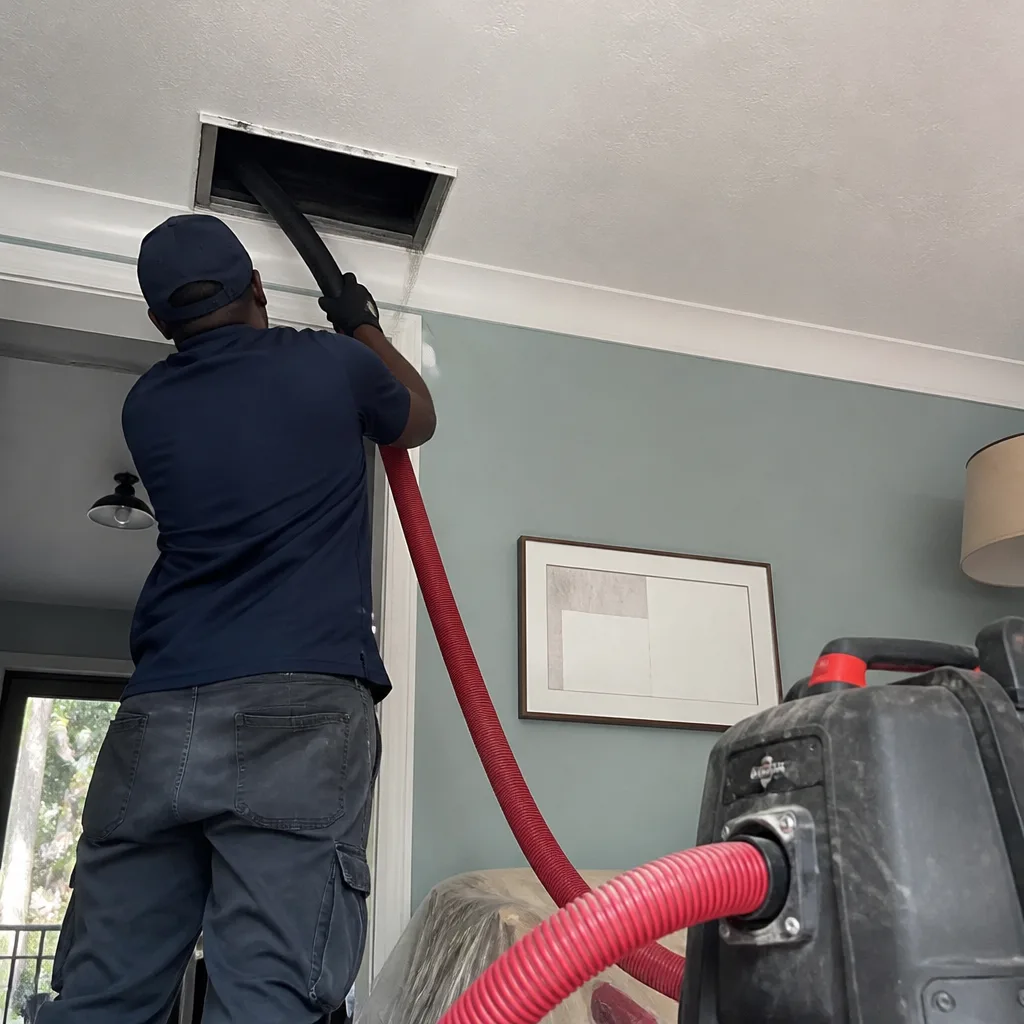
- Schedule professional negative-pressure extraction if the system hasn’t been cleaned in three years or more. This is the industry-standard method that creates a vacuum on the duct system while agitating debris loose, so particles are removed rather than pushed around. It’s the service Linde Air Duct Cleaning performs, and it’s the single most effective thing you can do for spring duct health in Marietta.
One Marietta-specific factor worth understanding: our spring thunderstorms create rapid humidity spikes that turn settled pollen into a sticky paste inside ducts. That paste then hardens over summer. Clean ducts in early June, and you remove that entire cycle before it starts.
Summer in Marietta: Humidity Changes What Accumulates
Marietta summers are not just hot. They’re persistently humid in a way that changes what happens inside your ductwork. From June through September, outdoor dew points regularly sit in the upper 60s and 70s, and your AC runs for hours every day. That means cold air moving through insulated flex duct and metal runs inside hot, humid attics. The temperature differential creates condensation, and condensation inside ducts is the starting condition for microbial growth on dust that’s already settled there.
What accumulates in summer differs from winter in one important way. Winter dust is dry and loose, mostly skin cells, fabric fibers, and pet dander. Summer accumulation is heavier and stickier because it’s bound with moisture. If you have any gaps or tears in flex duct insulation, humid attic air gets pulled into those gaps, wets the dust inside, and creates spots where mold and mildew can establish in as little as four to six weeks.
Summer duct care priorities for Marietta homeowners:
- Run the AC fan for 15 minutes daily with the compressor off if you can, or use the “circulate” setting. This moves air through ducts even when cooling isn’t needed, drying out residual moisture. It’s a small habit that matters during Marietta’s wettest stretches.
- Keep interior doors open during peak cooling hours. Closed doors create positive pressure in bedrooms and force conditioned air to escape through any duct leak, which pulls humid attic air in through the same path. This is one of the most overlooked summer duct problems in Cobb County split-level homes.
- Monitor supply vent temperature. Air coming out of a supply vent on a properly functioning system should feel at least 15 degrees cooler than the return air. If one vent feels noticeably warmer than others, you may have a disconnected or leaking duct run in an attic, something that gets worse the longer humid air has access to it.
- Schedule a duct inspection before August. Marietta’s late-summer stretch is when we see the most calls for musty smells coming from supply vents, which indicates moisture accumulation has already produced microbial growth. Catching a small condensation issue in June saves a full duct cleaning or even duct replacement by September.
For summer, the homeowner action that matters most is humidity management in the attic. Make sure attic ventilation is working. Ridge vents, soffit vents, and gable vents should all be clear of debris and functioning. An attic that stays below 120 degrees on a 95-degree Marietta day dramatically reduces condensation risk inside duct runs. The professional action we recommend is a pressure test or at minimum a visual inspection of all accessible duct connections, because summer is when small leaks become expensive problems.
Fall in Marietta: The Highest-Risk Transition
If there’s one season where Marietta homeowners genuinely face elevated risk, it’s fall. This is the transition from AC to heat, and it’s the moment when issues that have been dormant all summer suddenly become visible or, worse, dangerous. The specific concern with furnace operation is combustion safety. Gas furnaces in Cobb County homes burn natural gas, and the byproducts of that combustion, including carbon monoxide, are vented through a flue. But if the heat exchanger has developed a crack, or if a return duct is pulling the flue gases back into the home due to pressure imbalance, those byproducts end up in your living space.
Fall duct care in Marietta should include:
- Have the furnace heat exchanger inspected before first burn. This is a furnace service item, not a duct cleaning item, but it’s directly relevant because cracked heat exchangers are a leading cause of carbon monoxide exposure. Any HVAC technician in Marietta can perform this as part of fall furnace maintenance.
- Seal return duct leaks before heat season. A leaky return duct in an attic or crawlspace pulls whatever is in that space into your home. In winter, that includes insulation fibers, rodent droppings, and dusty attic air. What was acceptable in summer becomes a real air quality problem when the furnace runs for hours daily.
- Check dryer vent connection if your laundry shares a wall or chase with return ducting. This is a cross-contamination point many Marietta homeowners never consider. A dryer vent cleaning in Marietta removes accumulated lint that otherwise gets drawn toward the return side when both systems operate.
- Clean or replace the filter one final time before consistent furnace operation begins. Fall dust in Marietta includes all the leaf litter and outdoor debris that came in through open windows in September and October. That’s what your filter captures, but only if it’s clean at the start of the season.
We want to be plain about the danger here. Carbon monoxide is colorless, odorless, and a real risk in any home with a gas furnace. A working CO detector on each level is non-negotiable. But beyond the detector, having a professional inspect both the furnace and the connected ductwork in fall is the single most protective thing a Marietta homeowner can do for winter air quality and safety. This is not a DIY task, and anyone who suggests it is should not be in your home.
Winter in Marietta: The Dust Settlement Problem
January is routinely the worst indoor air quality month inside Marietta homes, and it’s not because more dust enters the house. It’s because the dust that settled in ductwork during the previous eleven months finally gets mobilized. When winter temperatures drop, furnace run times increase dramatically. Air moves faster and more frequently through ducts that have been accumulating debris all year. That accumulated layer, dried out and loosened by winter’s lower humidity, gets picked up and delivered directly into your living spaces.
Marietta winters also mean closed windows and doors. There is no air exchange happening, which means whatever is in the ducts stays in the air you’re breathing, often for days. Particulate levels build up. If anyone in the household has allergies, asthma, or respiratory sensitivity, January is the month it flares. Pet dander, fabric fibers, dust mite debris, and whatever pollen remains from spring all concentrate in the still indoor air.
Winter duct care for Marietta homes:
- Run the system fan on “on” for one hour daily, if your thermostat allows. This forces air through the filter continuously, which captures more particulate than intermittent operation. It costs a modest amount in electricity and meaningfully improves particle removal.
- Upgrade to a MERV 8 to MERV 11 filter during winter months, assuming your system can handle it. Higher MERV ratings mean more filtration and more airflow resistance. A filter that’s too restrictive for your system reduces airflow and makes the furnace work harder. MERV 8 is a safe default. Products from Linden Air Duct Marietta home include professional filter options that work with Aprilaire filter cabinets, which many Marietta homes have installed.
- Vacuum supply and return vent covers monthly during winter. This is a simple task that removes surface dust before it gets pulled back into the system. It takes ten minutes and makes a visible difference on white vent covers.
- If the system was not cleaned in fall, consider a winter duct cleaning. We perform air duct cleaning in Marietta year-round, and a January cleaning is often the difference between a household that’s coughing all winter and one that isn’t. The negative-pressure method works equally well in any season.
For winter, the homeowner action is filter management and vent hygiene. The technician action is either a furnace check in fall if you skipped it, or a full Air Duct Cleaning Maintenance Checklist for Marietta Homeowners visit in winter if your air is visibly dusty or your filters are clogging faster than every 90 days. Homeowners in neighborhoods with older housing stock, like the areas around the Marietta Square and parts of East Cobb, tend to have more settled duct debris simply because systems have been in place longer. That’s not a criticism; it’s just what we see when we open these systems up.
DIY Actions vs. Professional Work: What’s Worth Doing Yourself
There’s a real division of labor when it comes to duct care in Marietta, and being clear about it saves you money and frustration. Some tasks are genuinely doable by a homeowner with basic tools and a flashlight. Others require professional equipment and, honestly, professional training to do without making things worse.
DIY actions that are genuinely worth doing:
- Filter replacement. Every 60 to 90 days, more often if you have pets or a smoker in the home. This is the single highest-value maintenance item, and it’s a five-minute task.
- Vent cover vacuuming. Use a brush attachment on supply and return covers monthly during high-use seasons. Simple and effective.
- Visual inspection of accessible duct runs. If you have a walkable attic or crawlspace, look at the flex duct runs. Check for kinks, tears, crushed sections, or disconnected boots. You don’t need to fix what you find, but identifying it early prevents expensive problems.
- CO detector testing. Monthly, especially before heating season. This is not directly duct work, but it’s the monitoring system that tells you when combustion safety has failed.
- Condensate line flush for AC season. A cup of white vinegar poured down the condensate line from the air handler in April or May helps prevent clogs. Don’t use bleach, which can damage PVC over time.
Actions that require a professional:
- Full negative-pressure duct cleaning. This requires a high-powered vacuum system connected to your ductwork, plus agitation tools to dislodge caked debris. The equipment alone costs thousands of dollars. It’s not a shop-vac-and-a-brush job, and anyone who tells you otherwise is underdelivering.
- Duct repair. If you found a disconnected boot or an animal-chewed run, sealing it properly requires materials and techniques that are specific to duct systems. A bad repair leaks, and a leaking duct in a Marietta attic is worse than a disconnected one in some cases because it pulls unconditioned air in slowly and invisibly.
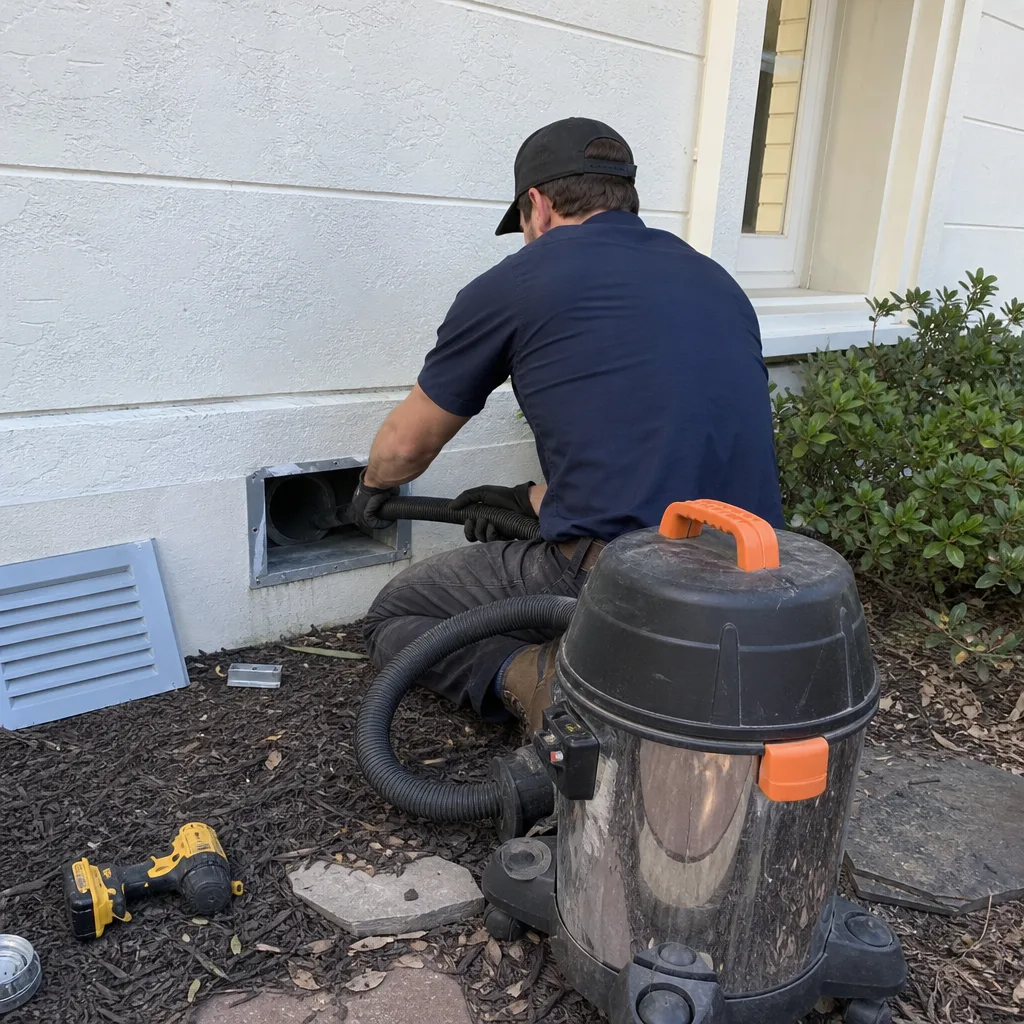
- Dryer vent cleaning. The lint accumulated in a dryer vent is a fire hazard, and it requires specialized brushes and vacuums to remove effectively through what may be a 15-foot or longer run with bends. Dryer vent cleaning in Marietta is not a homeowner task when the vent path is longer than a few feet.
- High-tension components. This applies more to garage doors than ducts, but the principle holds: any HVAC component under mechanical tension, like motorized dampers or certain zone-control hardware, should be handled by someone who knows the system. We’ve seen DIY damper repairs that caused whole-home pressure imbalances.
The honest summary: you can do the monitoring and the easy maintenance. The actual cleaning and repair work is professional territory, especially in larger Marietta homes where duct runs are long, often cramped, and sometimes inaccessible without proper equipment.
What Seasonal Duct Care Costs in Marietta
Let’s talk real numbers for the Marietta market, because understanding the price before you call is what allows you to make a confident decision-see our Air Duct Cleaning Cost Breakdown: The Marietta Homeowner’s Reference for 2026 for full details. These are whole-system prices, not teaser numbers, and they reflect what a legitimate company charges to do the work correctly.
| Service | Typical Marietta Price Range | What affects the price |
|---|---|---|
| Air duct cleaning, whole home (single system) | $350 – $600 | Number of vents, accessibility of air handler, degree of contamination, whether returns are in walls or floors |
| Air duct cleaning, two-system home (upstairs/downstairs) | $500 – $850 | Two air handlers, two plenums, sometimes separate returns |
| Dryer vent cleaning | $90 – $160 | Vent length, number of bends, roof vs. wall termination, accessibility |
| Air duct repair (small leak seal, boot reattachment) | $150 – $400 | Accessibility, materials needed, whether duct needs replacement section |
| Air duct repair (larger section replacement, damaged flex run) | $300 – $800 per run | Run length, attic accessibility, insulation requirements |
Why do some companies in the Marietta market advertise $99 whole-home duct cleaning? Because that price buys the initial service call, and the real invoice comes after the technician “discovers” problems during the work. It’s the classic bait-and-switch pattern that has unfortunately defined this industry in Cobb County and elsewhere. A legitimate duct cleaning company quotes one price before work begins and that price does not change unless you approve additional work in writing. That’s how Linden Air Duct Cleaning operates, and it’s the only honest way to run this business. For seasonal maintenance specifically, an inspection-only visit typically costs $75 to $150, which is often credited toward the cleaning if you proceed.
Filters are a separate cost you’ll carry regardless. A standard 1-inch MERV 8 filter runs $8 to $20 at any Marietta hardware store. A 4-inch Aprilaire media filter runs $30 to $50 and lasts 6 to 12 months. If you have an existing Aprilaire cabinet, we recommend those; the cost works out similar to buying four 1-inch filters over the same period, and the filtration is superior.
For an exact quote on your home, call (912) 405-8840. Estimates are free, and the price is put in writing before any work starts.
Common Mistakes to Avoid
- Cleaning ducts in April during peak pollen. It sounds proactive, but you’re cleaning a system that will be recontaminated within three weeks. Wait until late May or early June when Marietta’s pollen counts have dropped substantially.
- Skipping the furnace inspection in fall because the furnace “worked fine last winter.” Heat exchangers don’t fail loudly. They crack slowly, and the first sign is often a CO detector going off or, worse, symptoms that get mistaken for flu. Fall inspection is non-negotiable for gas furnaces in Marietta homes.
- Closing vents in unused rooms to save energy. Your system is balanced for the whole home. Closing vents increases static pressure and forces air through leaks or around closed dampers, which in a Marietta attic means humid air infiltration in summer and cold air infiltration in winter. It doesn’t save money; it damages the system.
- Using a cheap fiberglass filter and never upgrading. Those $2 filters stop large debris from hitting the coil, but they do almost nothing for the fine particulate that matters for respiratory health. A MERV 8 filter is the practical minimum for a Marietta home with central HVAC.
- Ignoring a musty smell from supply vents in summer because “it goes away.” It goes away because the mold growth cycle goes dormant when humidity drops, then returns when humidity spikes again. Musty supply air in a Marietta summer is a signal to schedule a duct inspection, not to wait and see.
- Doing duct cleaning during a major renovation. Drywall dust from a renovation will simply reclog your freshly cleaned ducts. If you’re doing construction, clean the ducts after the work is finished, not before.
- Assuming duct cleaning is a scam because one company quoted $99. The scam is the $99 quote, not the service itself. Proper duct cleaning with professional equipment takes 3 to 6 hours for a typical Marietta home. No one doing the job correctly can afford to charge $99.
When to Call a Professional
You should call a duct care professional when visual inspection reveals thick debris that has not been cleaned in years, when supply air smells musty in summer, when your filter is clogging within 30 days due to built-up duct debris, or when you’ve purchased a home and have no records of past cleaning. You should also call when a furnace inspection reveals a cracked heat exchanger, because a compromised furnace contaminates the connected ducts. Linden Air Duct Marietta offers free estimates in Marietta, and our technicians arrive with a written price before any work begins. You’ll know the tech’s name and see their photo before they arrive, and they’ll show a photo ID badge at the door. Call (912) 405-8840 to schedule an estimate.
Frequently Asked Questions
Air duct cleaning in Marietta typically costs $350 to $600 for a single-system home, with two-system homes ranging from $500 to $850. The exact price depends on the number of vents, accessibility of your air handler, and how much debris has accumulated in the system. Call (912) 405-8840 for a free estimate with a written price before any work begins.
Most Marietta homes benefit from professional air duct cleaning every 3 to 5 years, though homes with pets, smokers, or recent renovations may need it every 2 to 3 years. Homes with allergy sufferers or respiratory conditions in the household often do better with a 3-year cycle. The timing matters more than the interval; cleaning after pollen season or before winter furnace use delivers more value than cleaning at an arbitrary point in the calendar.
The cheap quotes you see, often $99 or less, are bait. The technician arrives, finds “mold” or “damage,” and the final invoice becomes $800 or more. A legitimate company quotes the whole job up front because the scope of work does not change once the technician is inside your home. Our advice: get the price in writing before anyone sets foot in the house, and if a company refuses, walk away. Call (912) 405-8840 for an honest quote on air duct cleaning in Marietta.
At Linden Air Duct Cleaning, we provide before-and-after photos of the inside of your ducts on every job. You’ll see the same return opening or supply boot photographed before cleaning and after, so you can verify the debris was actually removed. If a company can’t or won’t show you the work, that’s a red flag. The photos are your proof, and they’re included with every cleaning we perform in the Marietta area.
Yes, and it helps most for residents reacting to the specific pollen profile in Cobb County. Pine, oak, and hickory pollen settle inside ducts during spring and get continuously recirculated during summer and winter HVAC operation. Removing that accumulated layer reduces the total daily particle load in your indoor air, which for many allergy sufferers is the difference between managing symptoms and fighting them constantly. Combined with a MERV 8 or higher filter, duct cleaning meaningfully improves indoor air quality during Marietta’s worst pollen and dust seasons.
Not effectively, and in some cases not safely. Household vacuums and brushes cannot reach more than a foot or two into a duct run, and they lack the suction power required for negative-pressure extraction, the standard method that removes debris without pushing it into your living space. Proper cleaning requires a high-powered vacuum connected to the duct system and agitation tools designed specifically for duct interiors. The equipment investment alone makes DIY duct cleaning impractical. What you can do yourself: change filters, vacuum vent covers, and inspect accessible duct runs visually. Leave the actual cleaning to professionals with the right equipment.
The Bottom Line
Marietta’s four seasons each make a distinct demand on your ductwork: spring pollen, summer humidity, fall furnace transition, and winter dust circulation. Treating duct care as an annual chore misses three of those four windows. The homeowners who get the most from their HVAC systems and breathe the cleanest air are the ones who work on a seasonal rhythm: inspect after pollen, manage humidity in summer, verify furnace and duct integrity in fall, and filter aggressively in winter. You can do the monitoring yourself. For the actual cleaning and repair, work with a company that proves who they are before the door opens and puts the price in writing before the work begins. In Marietta, that’s us.
Written by Marcus Veale, Owner at Linden Air Duct Marietta, serving Marietta since 2004.
See the difference
 Before
 After
After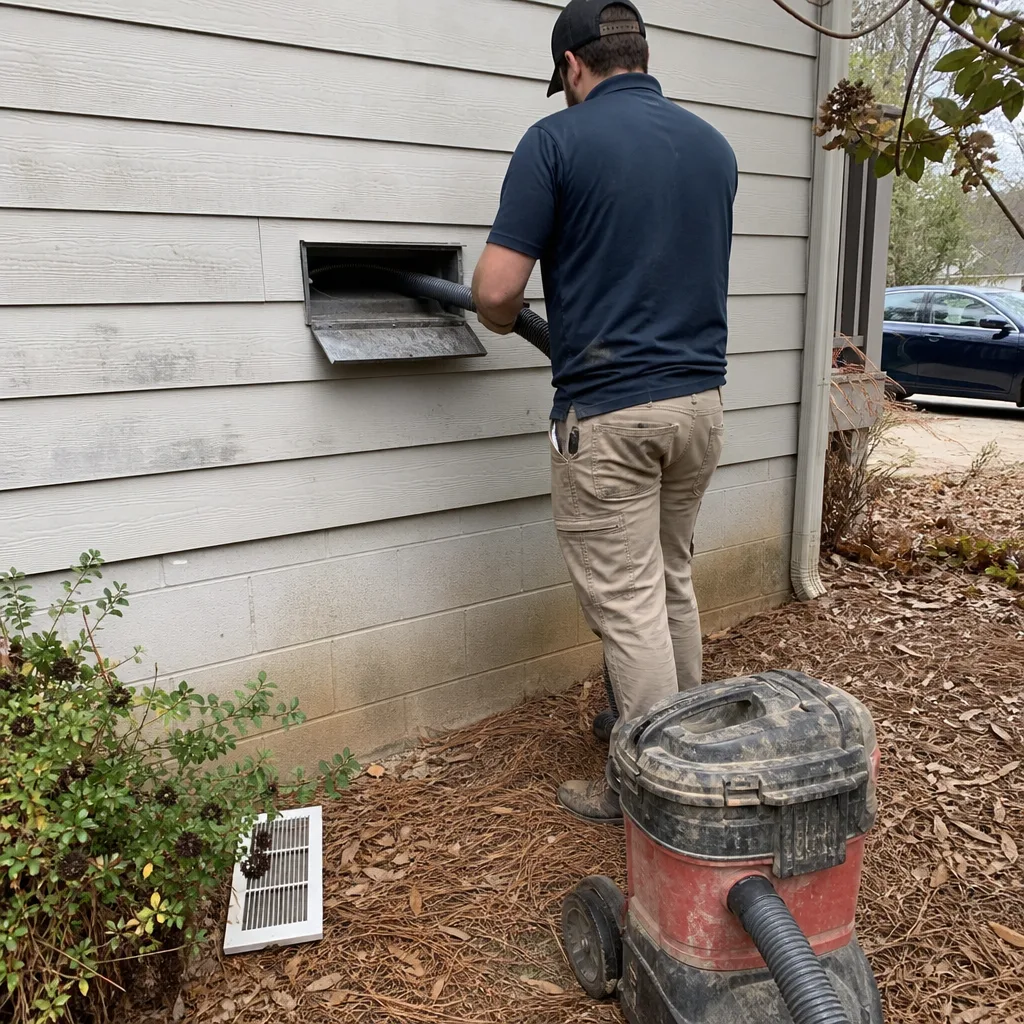 Before
 After
After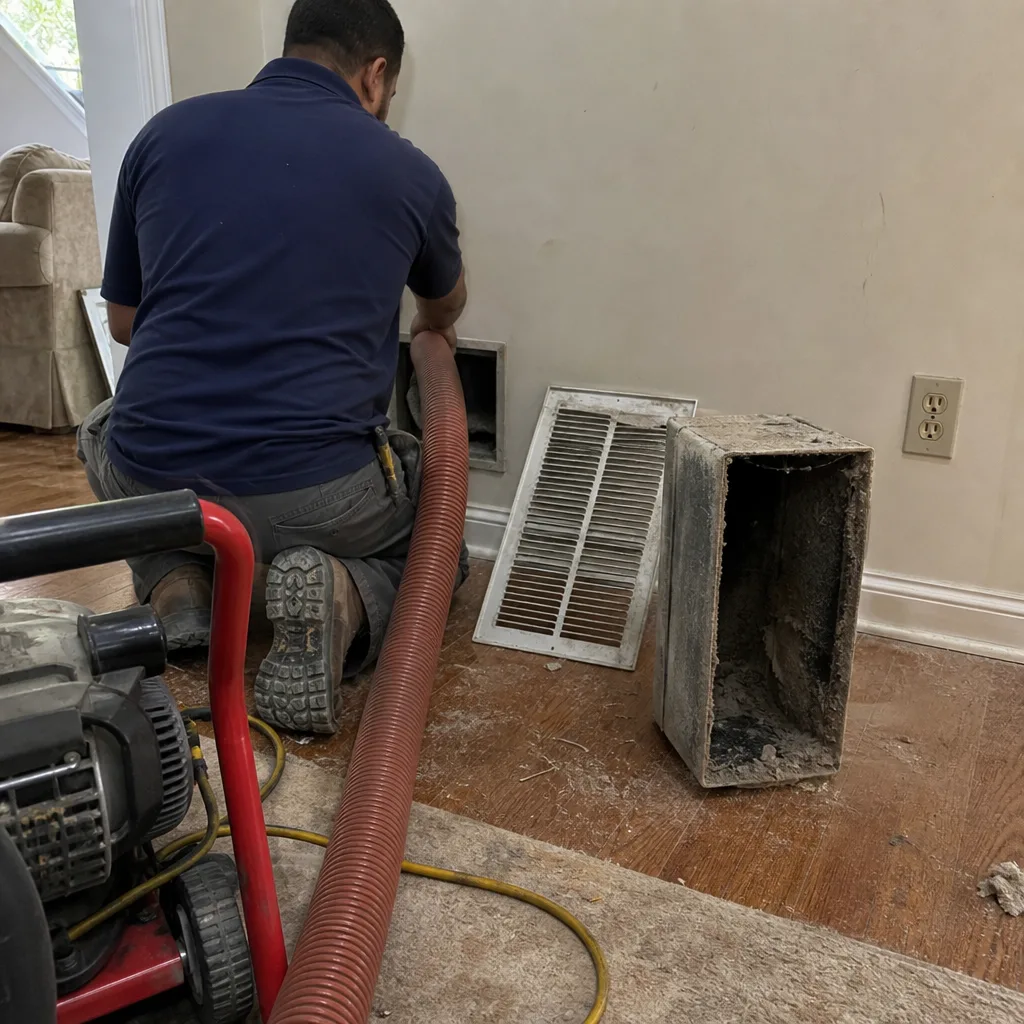 Before
 After
After